


Biométrie intégrée, QR, et reconnaissance faciale avec une porte mécanique de tourniquet
2026-05-19


Les systèmes modernes de contrôle d’accès utilisent plus qu’une simple serrure mécanique. À l’ère actuelle des systèmes de sécurité, un système de sécurité électronique intégré utilise une porte mécanique de tourniquets comme frontière. Les gestionnaires d’installations peuvent créer une sécurité élevée et une commodité élevée, Entrée sans contact grâce à l’intégration d’une porte mécanique de tourniquets fiable avec des lecteurs biométriques, Scanners de codes QR, et caméras de reconnaissance faciale. Dans cet article, Nous décrivons la manière dont les systèmes s’intègrent avec un exemple de Porte de tourniquet à trépied intelligent à double bras IRONMAN (Modèle IM.TL.02) à l’esprit.
1. Comprendre la porte mécanique du tourniquet comme plateforme
Une porte mécanique à tourniquets fonctionne comme une barrière physique pour une personne à la fois. Il ne « décide » pas qui entre; au lieu de, Il se déverrouille et permet une rotation lorsqu’il reçoit un signal électrique d’un lecteur externe. Cette simplicité rend toute porte mécanique à tourniquets très compatible avec presque toutes les technologies d’accès électroniques.
Caractéristiques clés d’une porte mécanique à tourniquets pertinentes pour l’intégration:
• Contact sec ou entrée de tension – Accepte une fermeture simple du relais (Par exemple,, 12V DC) pour déverrouiller la serrure.
• Contrôle directionnel – Peut être réglé pour un passage à sens unique ou à double sens.
• Le comportement de sécurité se déverrouille automatiquement et permet une rotation libre en cas d’urgence lorsque l’alimentation est coupée.
2. Intégration avec la reconnaissance de codes QR
Les codes QR scannables sont souvent utilisés pour la billetterie des stades, musées et des systèmes de gestion des visiteurs. Intégrer un scanner de codes QR à une porte mécanique de tourniquet est une tâche simple.
Tiens'Voilà comment ça marche:
• Le visiteur présente un code QR imprimé ou numérique.
• Le dispositif de balayage autorise l’accès en prenant une décision basée sur les informations trouvées dans la base de données locale ou cloud.
• Après validation, Le scanner envoie un signal de « passage » (Fermeture à contact sec) jusqu’à la porte mécanique du tourniquet.
• La porte se déverrouille pour une rotation, laisser passer le visiteur.
Exemple – IRONMAN Intelligent IM.TL.02:
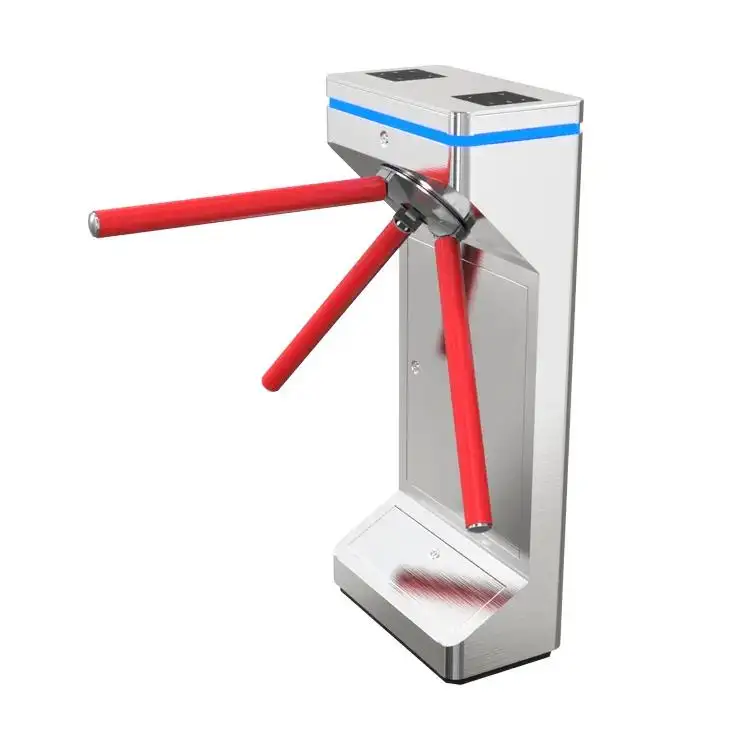
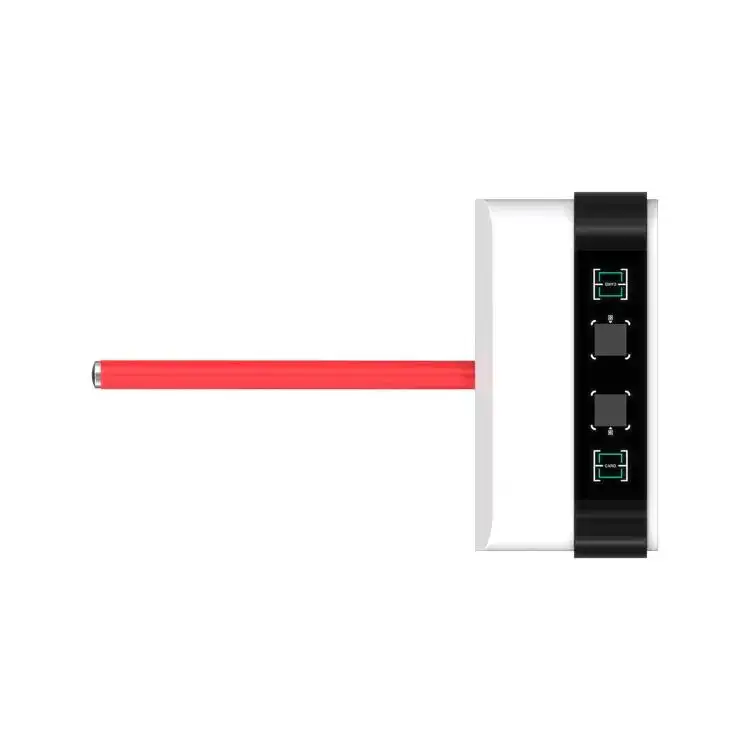
Cette porte à tourniquets à trépied à double bras prend en charge la reconnaissance de codes QR en mode d’accès intégré. Le lecteur est monté sur le boîtier supérieur, câblé directement sur la carte de contrôle. Aucun convertisseur externe n’est nécessaire.
Avantages de l’intégration QR:
• Faible coût par diplôme (Les codes imprimés sont presque gratuits).
• Pas de jetons physiques à distribuer ou à collecter.
• Fonctionne bien pour un accès temporaire (Événements, Livraisons).
3. Intégration avec le passage de cartes RFID
Les cartes RFID restent la certification la plus courante pour les bureaux et les communautés résidentielles. Une porte mécanique à tourniquet peut être associée à n’importe quelle 125 kHz (DANS, HID) ou 13,56 MHz (Mifare) lecteur.
Étapes de mise en œuvre:
• Installer un lecteur RFID près du côté d’entrée de la porte.
• Connecter la sortie du relais du lecteur à la borne d’entrée « ouverte » de la porte.
• Programmer le lecteur pour qu’il envoie une impulsion de 0,5 seconde lorsqu’une carte valide est présentée.
• La porte mécanique tourne une fois, puis se verrouille à nouveau.
Avantages de l’utilisation de la RFID + Systèmes mécaniques de portails à tourniquets:
• La technologie est établie, et la vitesse de lecture d’une carte est <0.3 Secondes.
• Fonctionne efficacement dans des conditions humides/poussiéreuses ou dans l’obscurité.
• Les cartes peuvent être liées aux systèmes d’assiduité actuels.
4. Intégration biométrique et reconnaissance faciale
Lecteurs biométriques (empreinte digitale, Veine du palmier, iris) Et les caméras de reconnaissance faciale offrent la sécurité la plus élevée car elles authentifient la personne, pas un jeton. Une porte mécanique à tourniquets est un partenaire idéal pour ces systèmes, car le retard mécanique de la porte (à propos 1 Deuxième par passage) Ça donne à l’algorithme biométrique suffisamment de temps pour traiter.
Flux de travail typique avec reconnaissance faciale:
• Une caméra capture le visage d’une personne approchant de la porte mécanique du tourniquet.
• L’algorithme embarqué compare la face à une base de données préenregistrée.
•Si correspond, Le contrôleur de la caméra envoie un signal de déverrouillage à la porte.
• Les bras de la porte pivotent pour permettre l’entrée et dissuader le tailgate.
Pourquoi choisir une porte mécanique à tourniquets pour la biométrie?
• Pas de bruit moteur – la biométrie fonctionne mieux dans des environnements calmes (Lobbies, Laboratoires).
• Faible consommation d’énergie – la porte ne consomme presque aucune énergie au repos, Idéal pour les systèmes biométriques à batterie.
• Anti-retour physique – la porte impose « un seul visage, une entrée. »
IRONMAN Intelligent IM.TL.02 est entièrement compatible avec les panneaux de reconnaissance faciale tiers. La grille fournit des entrées de contact sec standard (NO/NC) qui fonctionnent avec n’importe quel contrôleur biométrique.
5. La solution intelligente IRONMAN – Porte de tourniquet trépied à double bras IM.TL.02
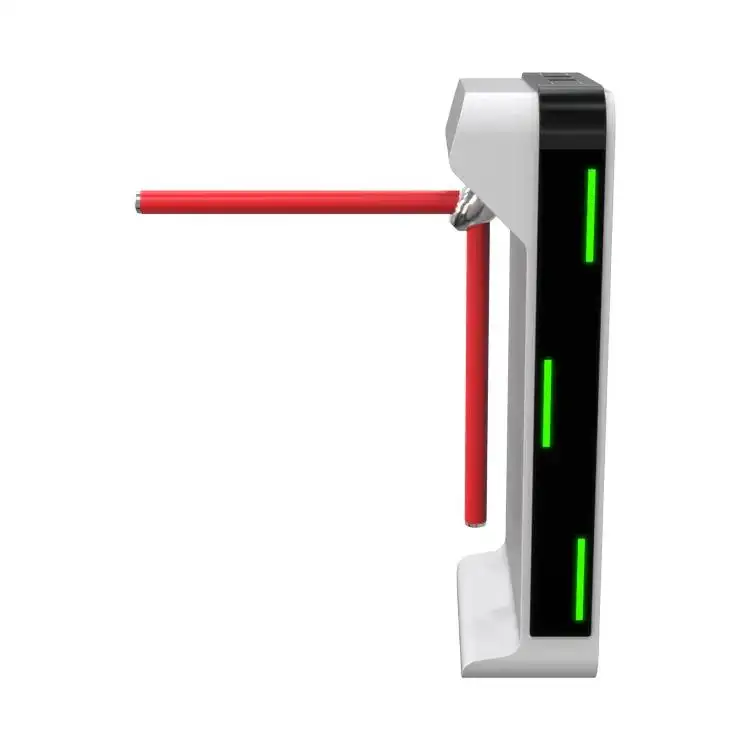
IRONMAN Intelligent a conçu la porte de tourniquet à trépied à double bras (IM.TL.02) spécifiquement pour l’intégration multimodale.
Avantages de conception de IM.TL.02 pour l’intégration:
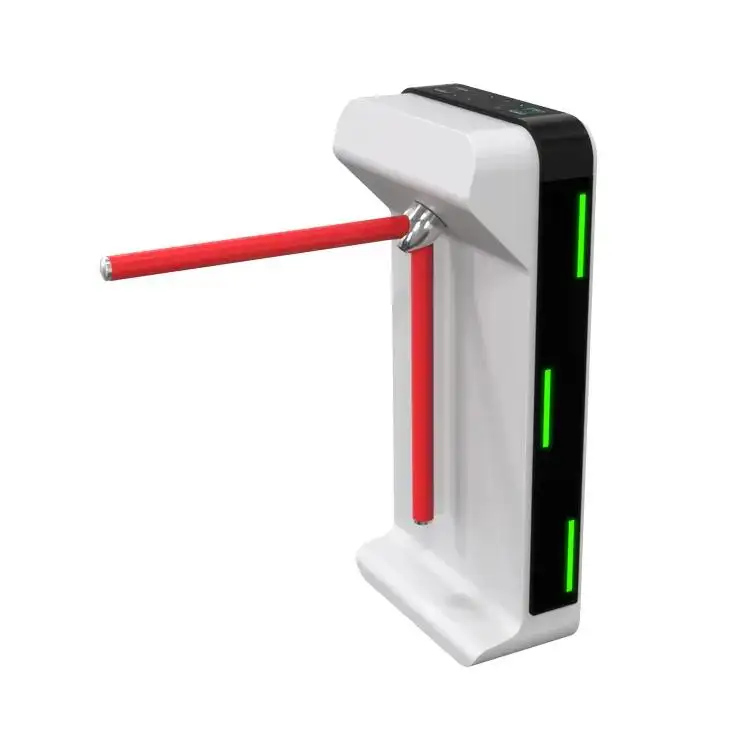
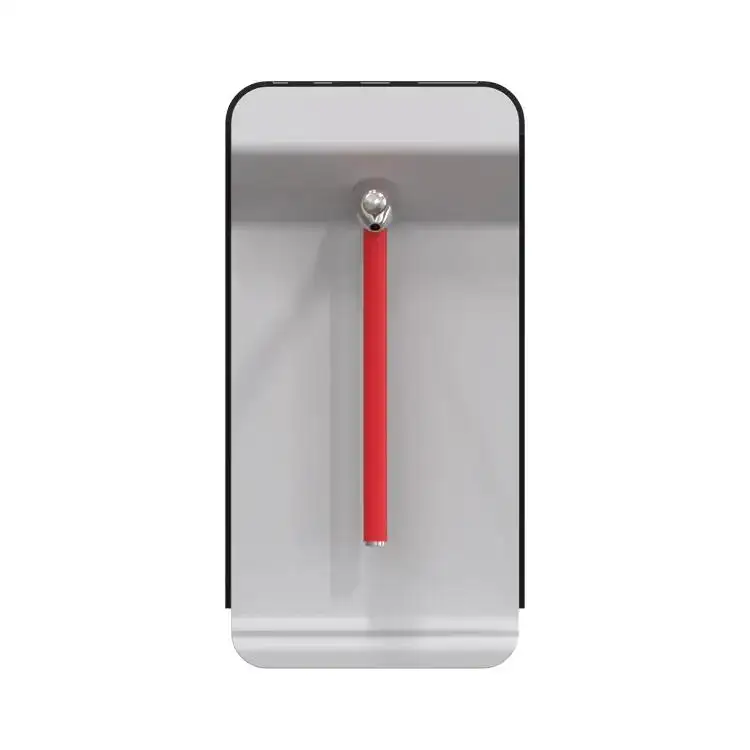
• Configuration à double bras – Les deux bras rouges (au lieu de trois sur un trépied traditionnel) réduire la complexité mécanique tout en évitant le collage. Cela permet une intégration plus fluide avec des lecteurs à haute vitesse.
• Caisse en acier SPCC de 1,5 mm – Offre une plateforme de montage stable pour les lecteurs externes, avec des trous pré-percés pour l’entrée des câbles.
• Carte de contrôle flexible – Prend en charge à la fois les signaux de contact sec et de tension (12V/24V DC). Il propose également une communication RS485 pour un retour d’état (Par exemple,, « Portail bloqué », « passage compté »).
• Double reconnaissance intégrée – Le modèle de base inclut déjà le passage de cartes et des lecteurs de codes QR. La mise à niveau vers la reconnaissance faciale nécessite simplement de brancher une unité externe dans l’interface réservée.
6. Contrôle d’accès multimodal pour différents groupes d’utilisateurs
L’intégration de nombreuses technologies d’identification dans une seule porte mécanique à tourniquets est possible. Par exemple:
•Employés - Utiliser des cartes RFID et/ou déployer la reconnaissance faciale.
•Invités - Scannez un QR Code envoyé par e-mail.
• VIP ou contractuels – Utilisez un lecteur d’empreintes digitales monté sur la même porte.
Le IM.TL.02 Permet de configurer différents modes d’accès pour chaque direction. Vous pouvez aussi établir une hiérarchie: si le code QR échoue, La porte peut revenir à un clavier numérique (optionnel).
Liste à puces des configurations mixtes prises en charge:
• RFID uniquement (pour les zones à haute sécurité)
• Code QR + Reconnaissance faciale (pour le sans contact, Zones d’hygiène élevée)
• Biométrie (empreinte digitale) + carte (pour l’authentification à deux facteurs)
• Mode de passage libre (bras déverrouillés) en dehors des heures de pointe
7. Considérations d’installation et de configuration
Une bonne intégration nécessite une attention particulière au câblage et au timing du signal. Voici des conseils pratiques pour connecter un lecteur à une porte mécanique à tourniquets comme la IM.TL.02.
Liste de contrôle du câblage:
• Utiliser un câble blindé pour les connexions lecteur-porte (Distance maximale 50 Mètres).
• Relier les bornes « COM » et « NO » du lecteur aux bornes « OPEN » et « GND » de la porte.
• Régler l’impulsion de sortie du lecteur à 0,5–1 seconde (plus court que le temps de rotation de la porte).
Si vous utilisez une caméra de reconnaissance faciale avec un écran, fournir une alimentation séparée en 12V (ne puisez pas dans la sortie auxiliaire limitée de la porte).
Étapes de configuration pour IM.TL.02:
• Alimenter la porte et régler les commutateurs DIP directionnels (Par exemple,, Entrée de gauche à droite uniquement).
• Connecter le lecteur externe au bloc terminal J7 (Entrée de contact sec).
• Tester en présentant une attestation valide – la porte doit produire un « clic » et les bras tournent librement pendant un tour complet.
• Ajuster la tension du ressort si les bras ne reviennent pas à l’horizontale après passage.
Note: Le IM.TL.02 Prend en charge les deux semi-automatiques (L’utilisateur pousse les bras) et entièrement automatique (Actionné par moteur) Modes. Pour l’intégration biométrique, Le semi-automatique est recommandé car il réduit l’usure du moteur.
8. Réel-Applications mondiales
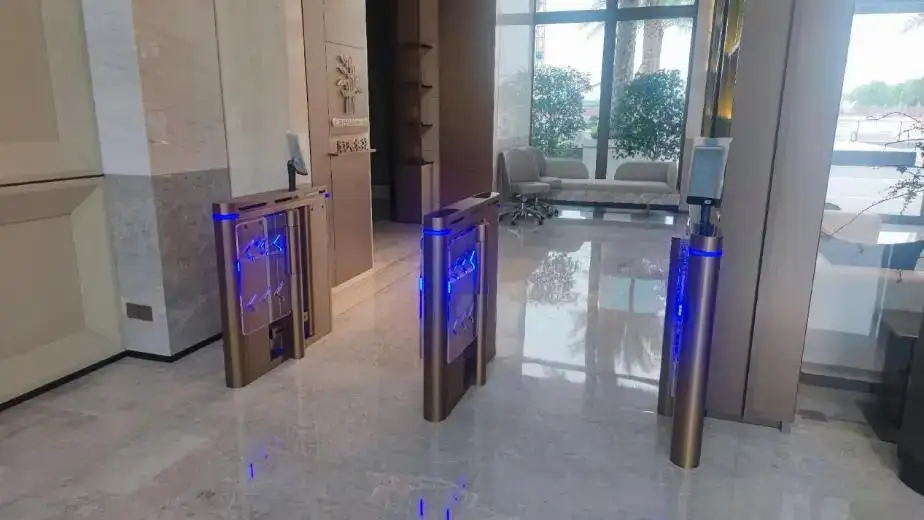
Les systèmes intégrés de porte mécanique à tourniquets sont déployés dans de nombreux environnements:
| Lieu | Méthode de reconnaissance | Pourquoi cela fonctionne |
| Bâtiment de bureaux | Reconnaissance faciale + RFID | Haute sécurité, Entrée mains libres |
| Atelier | Code QR (imprimés sur les badges) | Faible coût, Remplace les journaux papier |
| Dortoir universitaire | Passage de cartes | Débit rapide lors des changements de classe |
| Chantier de construction | Biométrique (empreinte digitale) | Empêche les coups de poing par les compagnons pour la présence |
| Entrée du stade | Code QR (Billets mobiles) | Pas besoin de distribuer des billets physiques |
L’IRONMAN Intelligent IM.TL.02 a été installé avec succès dans des parcs industriels et des halls commerciaux, où sa conception à double bras et son support multi-accès ont réduit les temps d’attente par 30% comparé aux portes à lecteur unique.
Conclusion
Biométrie intégrante, QR, ou la reconnaissance faciale avec une porte mécanique à tourniquet est très pratique. La porte offre une robuste, barrière de faible consommation alors que les lecteurs modernes permettent une authentification intelligente. La porte à tourniquets à trépied intelligent à double bras IRONMAN (IM.TL.02) cela illustre cela: support intégré de carte/QR, Boîtier en acier robuste, et un câblage flexible pour la biométrie tierce. Pour votre prochain projet d’accès, une porte mécanique multimodale à tourniquets offre sécurité et commodité à une fraction du coût des systèmes entièrement automatiques. Contactez l’équipe technique d’IRONMAN Intelligent pour obtenir des schémas électriques ou un exemple.
FAQ – Intégration des portes mécaniques de tourniquets
Q1: L’IRONMAN Intelligent peut-il IM.TL.02 Travailler avec n’importe quelle caméra de reconnaissance faciale?
Oui. Il accepte les signaux de contact sec provenant de pratiquement n’importe quel appareil de reconnaissance faciale tierce, tant que la sortie est une impulsion relais de 12V ou 24V.
Q2: Le Portapage Mécanique nécessite-t-il de l’alimentation pour rester verrouillé?
Non. À l’état d’inactivité, elle est verrouillée mécaniquement. Le solénoïde ne s’active que pour une impulsion courte lorsqu’une attestation valide est présentée. Cela en fait une sécurité infaillible et économe en énergie.
Q3: Puis-je utiliser des codes QR et des cartes RFID sur la même porte en même temps?
Absolument. Le IM.TL.02 Livré avec les deux lecteurs intégrés, Et vous pouvez attribuer des règles d’accès différentes pour chaque direction.
Q4: Que se passe-t-il si le lecteur biométrique tombe en panne ??
La porte mécanique du tourniquet reste verrouillée par défaut. Vous pouvez utiliser la libération manuelle ou passer à un lecteur de secours (Par exemple,, Clavier ou carte) sans changer le câblage de la porte.
Q5: Le design à double bras est-il mieux intégré qu’un trépied traditionnel ??Le double bras réduit la complexité mécanique et permet une rotation plus fluide, Ce qui convient bien aux lecteurs rapides. Cela réduit également la fréquence de maintenance.
