


Porte de tourniquets de l’aéroport: Types, Caractéristiques et comment choisir la bonne
2026-04-05


UnPorte de tourniquets de l’aéroport ce n’est pas qu’une barrière. C’est la première et la dernière ligne de contrôle d’accès entre votre terminal et vos passagers. Fais-le bien, et des milliers de voyageurs traversent les zones d’embarquement en quelques minutes sans friction. Tu te trompes, et tu fais face à des files d’attente, Failles de sécurité, et des pannes opérationnelles qui se propagent sur tout votre terminal. Ce guide couvre tous les types dePorte de tourniquets de l’aéroport disponible, quelles fonctionnalités comptent vraiment, et comment adapter la bonne porte à chaque zone de votre aéroport.
Qu’est-ce qu’une porte de tourniquet d’aéroport?
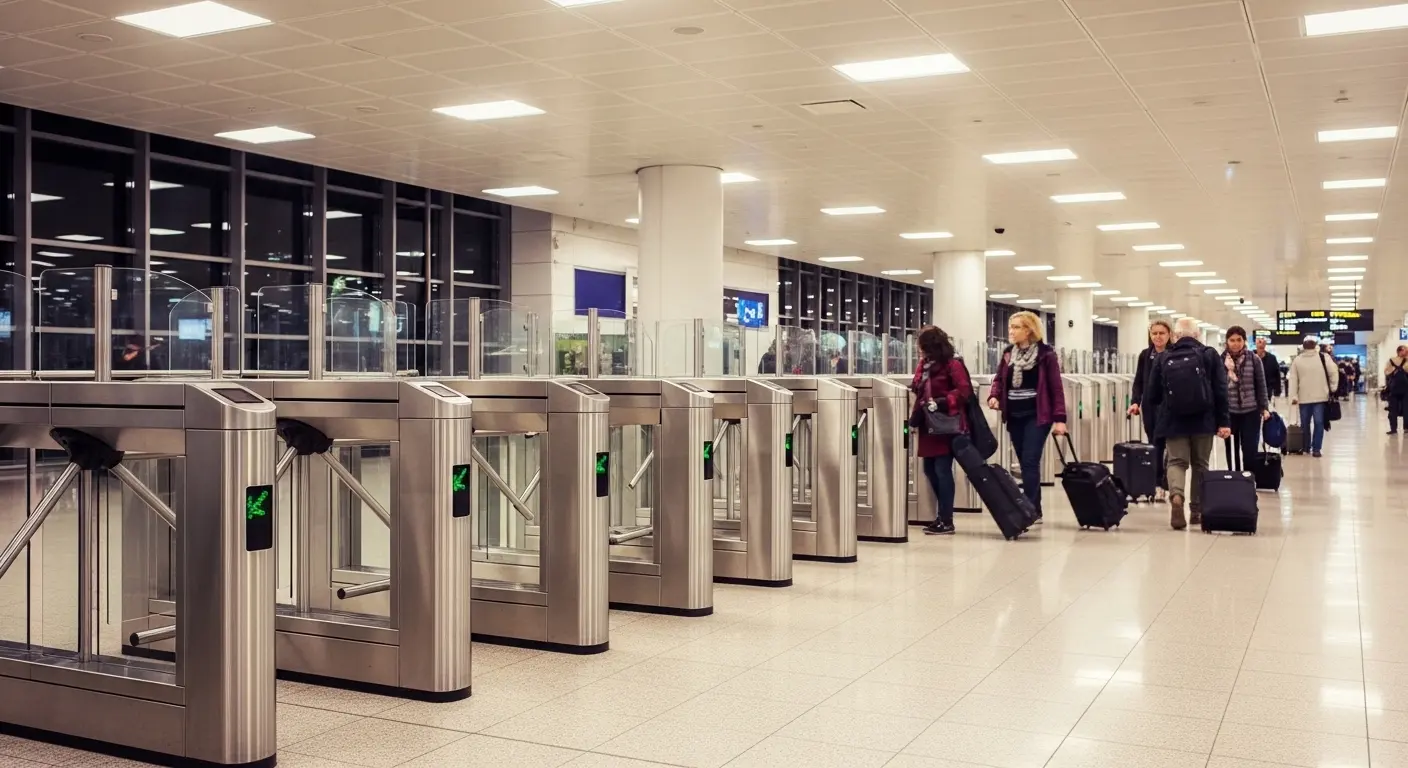
UnPorte de tourniquets de l’aéroport est une barrière motorisée de contrôle d’accès piétonnier conçue spécifiquement pour les environnements aéroportuaires à fort trafic. Il se trouve aux points de contrôle de sécurité, Voies d’embarquement, Halls d’arrivée, Corridors d’immigration, et des zones réservées au personnel. Son rôle est de vérifier les identifiants et de ne laisser passer que les personnes autorisées, Un à la fois, À grande vitesse.
Contrairement aux portails utilisés dans les immeubles de bureaux, Une version aéroportuaire doit gérer des milliers de passagers par heure. En fait, Les principaux aéroports internationaux traitent des centaines de milliers de passagers chaque jour sur tous les terminaux actifs. Ce type de charge nécessite que les portes soient connectées directement aux systèmes de contrôle des départs de la compagnie aérienne (DCS), Bases de données d’immigration, et les plateformes d’identité biométrique. Ce niveau de connectivité système est ce qui distingue un véritablePorte de tourniquets de l’aéroport depuis une barrière piétonne standard.
Chaque zone à l’intérieur d’un aéroport a également des besoins de débit différents. Par exemple, Une barrière d’embarquement nécessite une barrière à rabats rapides. Un corridor d’immigration peut nécessiter des portes électroniques biométriques. Une zone d’accès de maintenance nécessite une barrière périmétrique de pleine hauteur. Un seul type de porte ne couvre pas tous les cas d’usage.
Pourquoi les environnements aéroportuaires ont besoin de portes spécialement conçues
Les portails commerciaux standards sont construits pour les horaires de circulation de 9h à 17h. Exploitation aéroportuaire 24/7. Le volume de passagers augmente fortement pendant les fenêtres de départ, Sommets d’arrivée, et perturbations de vol. En fait, Un seul aéroport international de taille moyenne peut voir au-dessus 800,000 Passagers par jour sur tous les terminaux.
D'abord, Les aéroports exigent un débit élevé, Signification 30 ou plus de personnes par minute dans les zones d’embarquement. Suivant, Ils nécessitent quasiment zéro temps d’arrêt, car une défaillance de porte d’embarquement dans une voie d’embarquement crée des problèmes immédiats de gestion des passagers. Finalement, Les portes d’embarquement doivent gérer des profils de passagers variés: Familles avec poussettes, Voyageurs âgés, Utilisateurs de fauteuils roulants, et des personnes transportant des bagages de cabine surdimensionnés.
En conséquence, un projet spécialement conçuSystème de portails de vitesse aéroportuaires est le seul choix fiable pour les environnements d’embarquement et d’arrivée. Les tourniquets commerciaux génériques ne peuvent pas répondre à ces demandes combinées, et la différence devient évidente dès la première heure de pointe d’exploitation.
Types de systèmes de portails de tourniquets d’aéroport
Le choix du bon type commence par comprendre où la porte sera installée et quel profil de passagers elle servira.
Barrière de volets: La norme de la porte d’embarquement
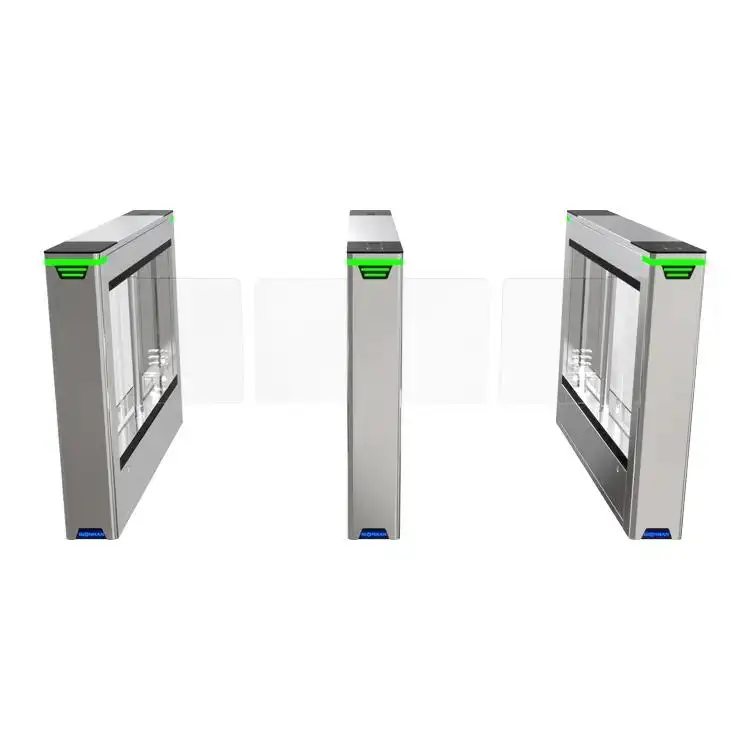
La barrière de volets est la plus largement déployéePorte de tourniquets de l’aéroport Inscrivez les zones d’embarquement et les halls des départs. Ses panneaux rétractables s’ouvrent en moins d’une demi-seconde et se ferment tout aussi vite. Le débit atteint généralement 30 À 45 Personnes par minute par voie, ce qui la rend idéale pour des fenêtres de départ serrées où chaque seconde compte.
Les barrières à volets supportent les configurations de larges voies, de 550 mm à 900 mm, Ainsi, les passagers peuvent circuler avec des bagages à main sans se tourner sur le côté. La plupart des modèles incluent des réseaux infrarouges multifaisceaux détectant le collage, Passage incomplet, et tentatives d’entrée inversée. Pour les couloirs d’embarquement nécessitant à la fois le scan de codes-barres et le support des codes QR, lePorte de tourniquet à code-barres gère les formats de cartes d’embarquement 1D et 2D, dégageant chaque passager en moins de deux secondes.
Porte de vitesse / Tourniquet optique
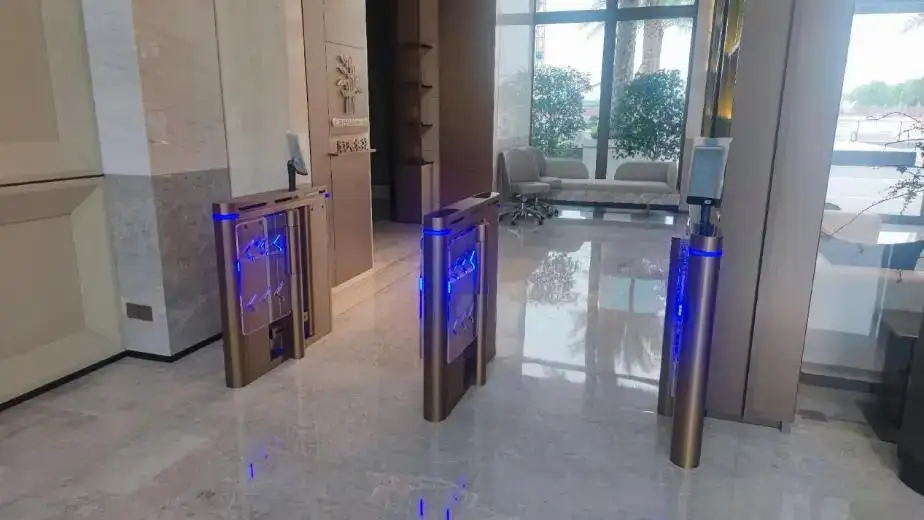
Les portails de vitesse utilisent des panneaux rétractables en verre ou en acrylique et fonctionnent à des débits très élevés, Souvent au-delà 40 Personnes par minute. Ils sont couramment déployés dans les halls d’arrivée, Salons VIP, et des zones terminales premium où l’esthétique propre est importante, aux côtés du contrôle d’accès physique.
LeTourniquet de porte coulissante en verre convient bien à ces environnements. Il combine 8 paires de détecteurs infrarouges, Panneaux en verre trempé, et une autorisation bidirectionnelle dans un format qui s’adapte à l’architecture terminale moderne sans paraître industriel. Les portails de vitesse supportent également des largeurs de voie allant jusqu’à 914 mm, qui accueille les passagers équipés d’aides à la mobilité, Wagonnets à bagages, et des poussettes sans changement de voie.
Tourniquet à porte battante
Les barrières battantes offrent les options de passage les plus larges de tous types de barrières et jouent un rôle clé dans les voies conformes à l’ADA et accessibles. La plupart des aéroports installent une porte battante à côté des rangées standard de barrières de rabats. Cette configuration gère les utilisateurs de fauteuils roulants et les bagages surdimensionnés sans perturber le flux général des passagers dans les voies adjacentes.
LePorte oscillante bidirectionnelle peut desservir le trafic à double sens. Pratiquement, C’est utile dans les zones où le flux de passagers entrants et sortants alterne entre différentes phases de vol au cours de la journée.
Porte de tourniquet à hauteur de taille
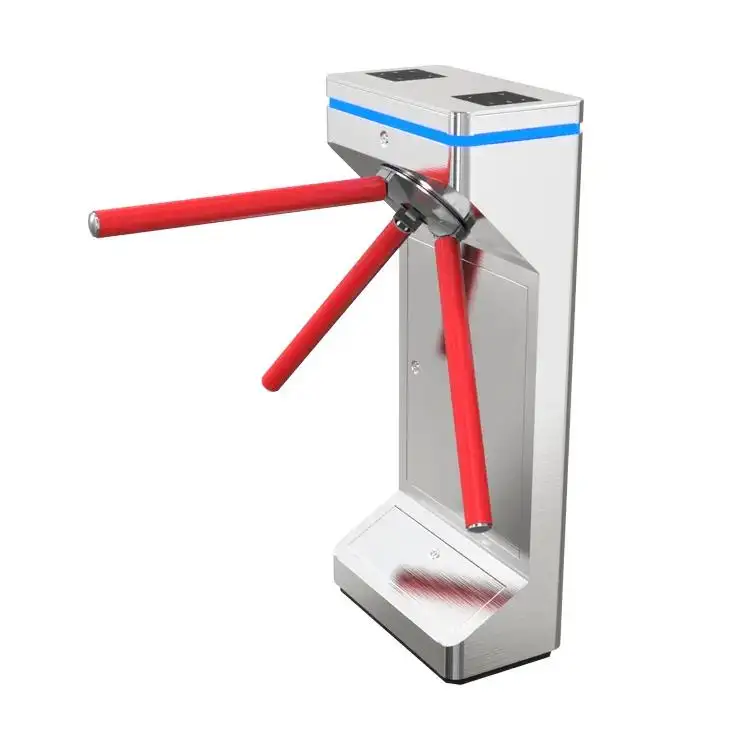
Pour les zones aéroportuaires à sécurité réduite, comme les halls d’enregistrement généraux, Installations de restauration pour le personnel, ou des points d’accès au stationnement au bord du sol, aPorte de tourniquet à hauteur de taille Fournit une gestion d’accès de base à un coût pratique. Celles-ci ne sont pas utilisées aux portes d’embarquement sécurisées, Mais ils jouent un rôle réel dans le contrôle plus large des installations aéroportuaires dans les zones non sécurisées.
Porte à tourniquets pleine hauteur
Les modèles pleine hauteur se déplacent du sol au plafond et sont utilisés dans les zones aéroportuaires les plus sensibles: Zones de manutention des marchandises, maintenance corridors, Zones restreintes du personnel, et points d’accès périmétriques. Leur structure physique empêche de grimper par-dessus ou de se baisser dessous, que les systèmes électroniques uniquement ne peuvent tout simplement pas garantir.
LeTourniquet de pleine hauteur anti-queue est conçu spécifiquement pour ces environnements. Il combine une construction en acier de qualité industrielle avec un verrouillage électronique et un fonctionnement sécurisé, en fait le bon choix pour toute zone où un accès non autorisé comporte un risque opérationnel sérieux.
Caractéristiques clés à rechercher dans une porte de tourniquets d’aéroport
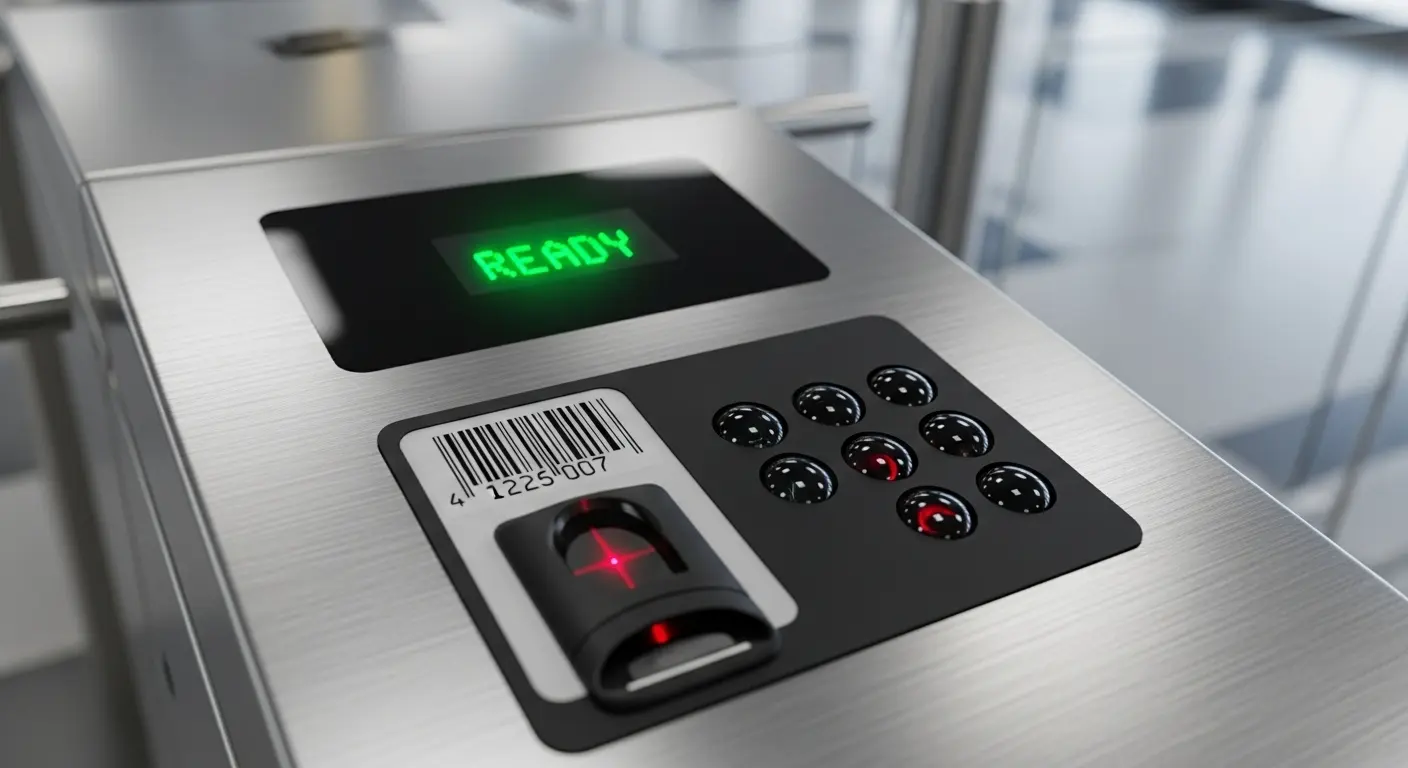
Lors de l’évaluation de toutPorte de tourniquets de l’aéroport, Ces caractéristiques séparent les produits de qualité aéroportuaire des barrières commerciales standard.
Vitesse de débit
Pour les demandes à la porte d’embarquement, Cherchez un taux de réussite minimum de 30 Personnes par minute. Barrières de volets et barrières de vitesse mènent régulièrement dans cette catégorie, avec des modèles haut de gamme atteignant 45 Personnes par minute par voie.
Détection anti-collage
L’application du passage à une seule personne est non négociable dans toute zone aéroportuaire sécurisée. Les meilleurs systèmes utilisent des réseaux infrarouges multi-zones plutôt que des capteurs à faisceau unique. LePorte de tourniquet AB anti-tailgating utilise la détection infrarouge bi-zone pour signaler les tentatives de suivi rapproché et les passages forcés à entrée unique avant qu’ils ne franchissent le point de contrôle.
Fonctionnement de sécurité
En cas de panne de courant ou d’alarme incendie, Les portes doivent s’ouvrir automatiquement par défaut. Cherchez une batterie de secours, Libération d’urgence, et des configurations par défaut par défaut en mode ouvrage comme caractéristiques standard, Pas d’options d’amélioration.
Options de largeur de voie
Les passagers de l’aéroport transportent des bagages. Une largeur de passage de 550 mm est le minimum absolu pour toute voie orientée passagers. Les zones à fort trafic et les voies d’accessibilité doivent spécifier des plages de 800 mm à 900 mm afin d’éviter de créer des goulots d’étranglement aux heures de pointe.
Niveau sonore
Les moteurs brushless à courant continu fonctionnent silencieusement et sont essentiels dans les environnements terminaux très fréquentés. Le bruit de la porte d’embarquement accentue le stress des passagers lors des créatures de pointe et nuit à l’expérience du terminal.
Certifications
Au minimum, cherche CE, FCC, ISO9001, et certifications ROHS. Celles-ci confirment que la grille répond aux exigences de compatibilité électromagnétique, Normes de sécurité, et des références de gestion qualité appropriées pour les infrastructures aéroportuaires critiques.
Technologie intelligente: À quoi se connectent les portes de tourniquets d’aéroport modernes
L’écart entre une barrière de base et un vraiPorte de tourniquets de l’aéroport Le système dépend de ce à quoi il se connecte. Les déploiements modernes dans les aéroports intègrent les portes d’un écosystème technologique plus large, Pas en tant que matériel autonome.
Numérisation de la carte d’embarquement par code-barres et QR code
Les passagers scannent les cartes d’embarquement à la voie. La porte indique le titre de propriété, le compare à la base de données DCS, et ouvre. LePorte de tourniquet à code-barres prend en charge à la fois les formats code-barres 1D et code QR 2D, dégageant chaque passager en moins de deux secondes, ce qui est crucial pour maintenir le rythme de voie pendant les fenêtres d’embarquement.
Vérification biométrique
Reconnaissance faciale, Lecteurs d’empreintes digitales, Scanners d’iris, et les lecteurs de veines de palme peuvent être montés directement sur des armoires à porte. Pour les voies d’immigration et l’embarquement à haute sécurité, La vérification biométrique vérifie l’identité par rapport aux bases de données de documents de voyage en temps réel. Cela élimine la dépendance aux documents papier et accélère considérablement le traitement par passager.
Gestion des portes basée sur le cloud
APortail de tourniquets basé sur le cloud se connecte à une plateforme de gestion centrale via un réseau privé. Les exploitants aéroportuaires peuvent alors surveiller l’état des portes d’embarquement, Modifications des permissions d’accès push, et extraire des journaux détaillés de passage à partir d’un seul tableau de bord. Cela fonctionne sur plusieurs terminaux ou plusieurs sites aéroportuaires à partir d’une seule interface.
Accès RFID et carte à puce pour le personnel
Les voies de tourniquets pour le personnel fonctionnent généralement avec des identifiants RFID. Connecter les portes aux systèmes RH signifie que les droits d’accès se mettent à jour automatiquement lorsqu’un employé change de rôle ou quitte la situation. Pratiquement, Cela comble le fossé d’accréditation qui crée des vulnérabilités de sécurité dans les grands environnements du personnel des aéroports.
Guide zone par zone: Correspondance du type de porte à l’emplacement de l’aéroport
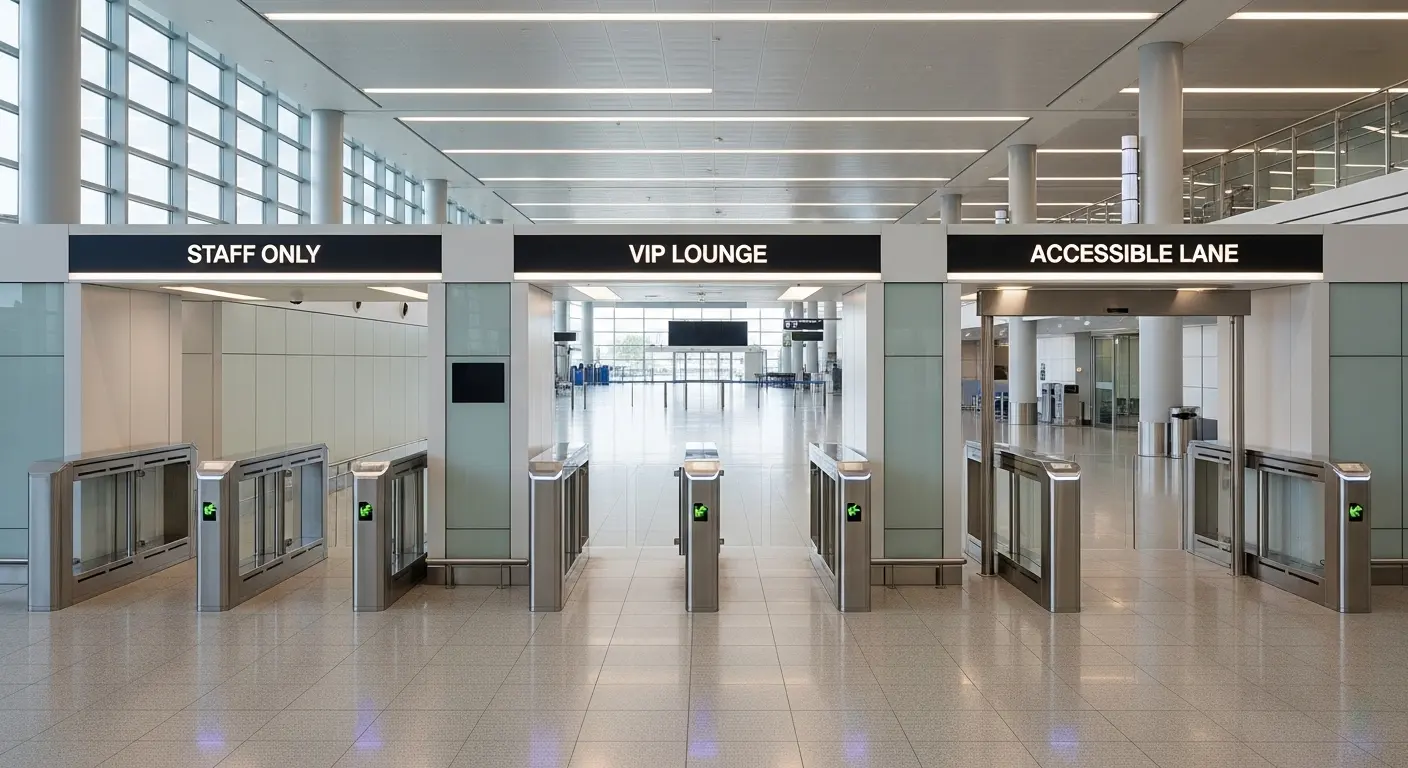
C’est là que la plupart des acheteurs commettent la plus grosse erreur. Ils se concentrent sur une seule spécification de porte d’embarquement plutôt que de correspondre chaque zone aéroportuaire à ses exigences spécifiques. Utilisez ce cadre comme point de départ:
| Zone aéroportuaire | Type de porte recommandé | Priorité clé |
|---|---|---|
| Portes d’embarquement | Barrière de volets / Porte de vitesse | Vitesse de rendement |
| Immigration / Contrôle des passeports | eGate avec lecteur biométrique | Précision identitaire |
| Halls d’arrivée | Porte de vitesse / Porte battante | Esthétique et flux de passagers |
| Salons VIP | Portail de vitesse en verre ou portail pivotant | Fonctionnement silencieux et esthétique |
| Couloirs du personnel | Pleine hauteur ou anti-tailgating | Sécurité physique du périmètre |
| Accessible / Voies ADA | Porte battant à large voie (900mm ) | Conformité et accessibilité |
| Zones de fret et de maintenance | Tourniquet pleine hauteur | Contrôle périmétrique |
Type de porte au-delà, Évaluez également les exigences de connexion système (À quelles plateformes doit-il se connecter?), Objectifs de débit aux heures de pointe, Conditions environnementales (En salle vs. extérieur, Climatisé vs. Terminaux humides), et si l’aéroport a des contraintes de marque ou d’architecture concernant la finition et les dimensions des armoires.
Ironman Turnstile a fourniPorte de tourniquets de l’aéroport Systèmes à travers plusieurs projets internationaux, avec les dimensions d’armoire sur mesure, Options de finition, et des configurations de lecteurs disponibles pour des spécifications spécifiques des terminaux.
Erreurs courantes lors de la spécification d’une porte de tourniquet d’aéroport
Éviter ces quatre erreurs peut permettre d’économiser d’importants coûts opérationnels et des soucis de sécurité après l’installation.
En se concentrant uniquement sur le prix unitaire. Les portes à faible coût échouent souvent en continu 24/7 Cycles de chargement aéroportuaires. Une défaillance de porte d’embarquement dans une voie d’embarquement crée des problèmes immédiats de gestion des passagers et oblige à un traitement manuel, qui est par nature plus lente. Le coût opérationnel à vie des temps d’arrêt dépasse largement les économies initiales réalisées par une unité moins chère.
Ignorer les exigences de connectivité système. Une porte qui ne peut pas se connecter à votre DCS, Plateforme biométrique, Ou alors le système de contrôle d’accès n’est pas une solution. Cela crée une solution manuelle qui ralentit toute la voie et annule l’objectif du contrôle d’accès automatisé. Vérifiez toujours la compatibilité des protocoles avant d’acheter.
Sous-estimation de la largeur de voie. Largeurs commerciales standard de 550 mm pour les immeubles de bureaux. Dans les aéroports, Les passagers voyagent avec des bagages à main, Sacs à dos, et parfois des poussettes. Spécifiez des voies de 800 mm à 900 mm pour toute zone principale orientée passagers comme référence, Pas une amélioration.
Saut de la spécification anti-tailgating. Dans des environnements à fort volume, Le tailgating est presque garanti sans détection multi-capteurs appropriée. Les capteurs à faisceau simple ne suffisent pas pour la sécurité aéroportuaire. Exigez l’infrarouge bizone ou multi-faisceau comme élément standard dans votre cahier des charges.
FAQ: Portes de tourniquets de l’aéroport
Qu’est-ce qu’une porte de tourniquets d’aéroport et où est-elle utilisée?
UnPorte de tourniquets de l’aéroport est une barrière motorisée de contrôle d’accès piéton utilisée aux portes d’embarquement, Points de contrôle d’immigration, Halls d’arrivée, Couloirs du personnel, et zones restreintes à l’intérieur des aéroports. Il vérifie les identifiants (code-barres, biométrique, ou RFID) et contrôle l’entrée une personne à la fois, connexion directe aux systèmes informatiques de sécurité et aériennes.
Quel type de porte tourniquet d’aéroport est le mieux placé pour les zones d’embarquement?
Les tourniquets barrières à volets et les portails de vitesse sont les meilleurs pour les voies d’embarquement. Les deux offrent des taux de rendement de 30 À 45 personnes par minute par voie et support pour la carte d’embarquement et le code QR scannant directement à la porte. Leurs temps de réponse rapides sur les panneaux maintiennent un rythme de voie stable même lors des rushs d’embarquement aux pointes.
Un portail de tourniquets d’aéroport peut-il se connecter à des systèmes biométriques?
Oui. Les plus modernesPorte de tourniquets de l’aéroport Les mannequins prennent en charge la reconnaissance faciale, empreinte digitale, iris, et lecteurs de veines de palme, soit en modules intégrés, soit en périphériques additionnels. Ils peuvent se connecter aux bases de données DCS et immigration des compagnies aériennes pour vérifier l’identité en temps réel, suppression du besoin de vérifications manuelles des documents.
Quelle devrait être la largeur d’une voie de porte de tourniquets d’aéroport?
Pour un usage général des passagers avec bagages à main, La largeur minimale recommandée de voie est de 550 mm. Voies d’accessibilité, Zones principales d’embarquement, et les couloirs d’arrivée doivent spécifier des configurations de 800 mm à 900 mm pour supporter les bagages, Poussettes, Fauteuils roulants, et aides à la mobilité sans créer de goulets d’étranglement.
Quelles certifications doit avoir une porte de tourniquets d’aéroport?
Cherchez CE, FCC, ISO9001, et les certifications ROHS comme normes minimales. Celles-ci confirment que la grille répond aux exigences de compatibilité électromagnétique, Normes internationales de sécurité, et des normes de gestion de la qualité adaptées aux infrastructures aéroportuaires critiques. Les produits Ironman Turniquets portent les quatre certifications.
